
Environment
Your Home Is Not Neutral
A room can look beautiful and still exhaust you. Light, air, sound, and order send signals the body reads whether or not you do. Coherence, not price, is what makes a home restorative.
By Wellness First Editorial · 10 April 2026
Welcome. This is long-form writing—meant to be read in a calm stretch, and to revisit when the questions in your life resurface. There is no score here; only language you can use in a real week.
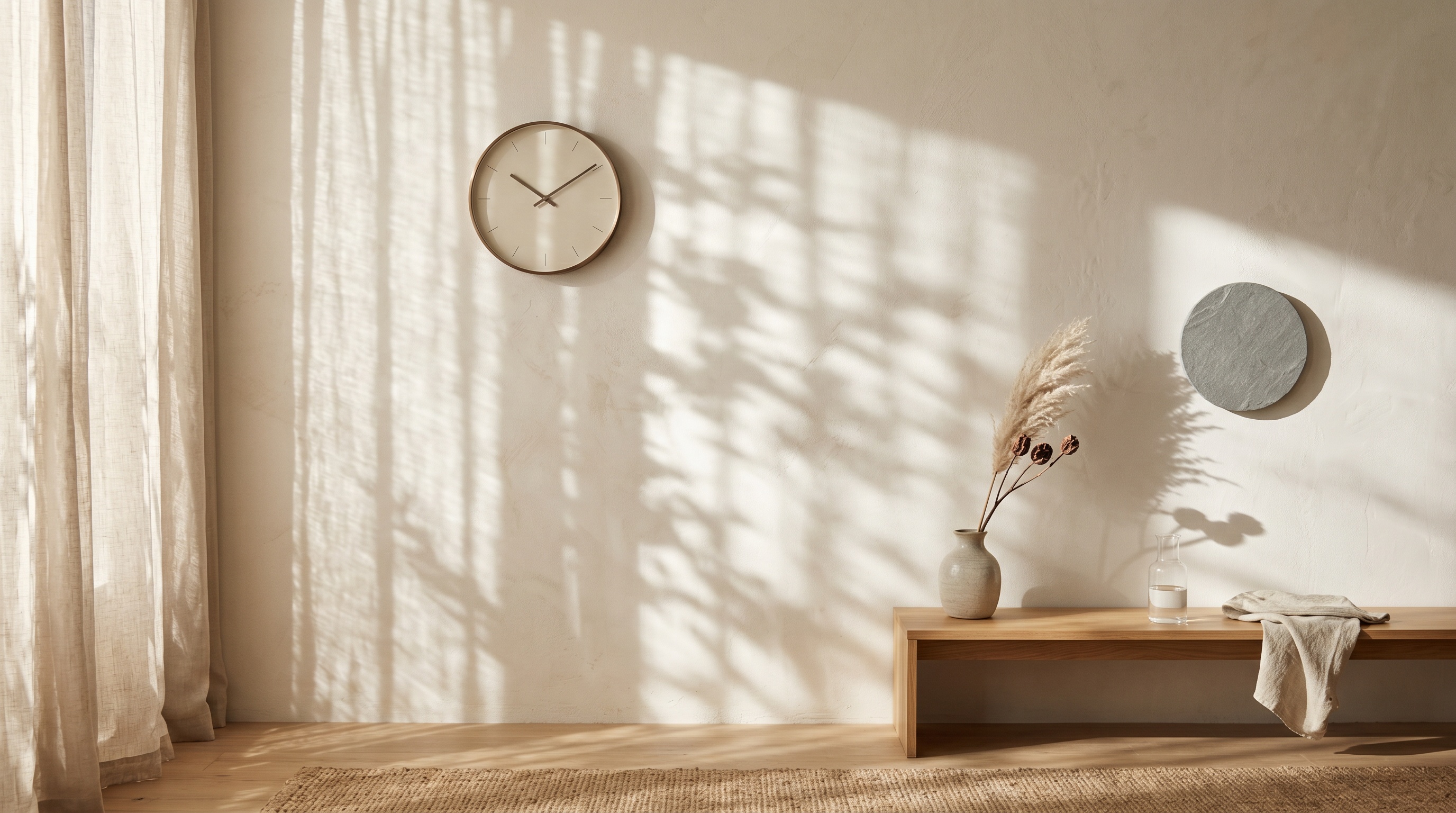
A home is not just a place where life happens. It shapes life. Every room sends signals to the body. Light, air, sound, temperature, layout, materials, clutter, color, technology, and spatial order all influence how we feel. Some homes help us exhale. Others keep the system subtly alert.
We often think of interior design visually. Does the space look beautiful? Is it modern? Is it stylish? But the deeper question is: how does the space affect the nervous system? A room can be aesthetically impressive and still exhausting. Harsh lighting, poor air, constant noise, too many objects, synthetic materials, uncomfortable furniture, visual chaos, and digital overstimulation all create micro-stress. The body may not name these influences, but it registers them.
This is why environment belongs inside wellness. We cannot separate the person from the place they live. A body trying to recover in a stressful space has to work harder. A mind seeking clarity in visual disorder has to constantly filter. A nervous system trying to settle in bright artificial light and background noise receives mixed messages.
The home should not only store belongings. It should support regulation. One of the simplest environmental shifts is reducing visual noise. Surfaces do not need to be empty, but they should feel intentional. Objects carry emotional weight. Unfinished tasks, piles of paper, random purchases, and crowded shelves all speak to the mind.
Another powerful shift is light. Morning light activates. Evening light should soften. Many homes are too dark during the day and too bright at night. This reverses the body’s natural rhythm. Sound also matters. A constant hum, traffic, appliances, televisions, or open devices can keep the body in a state of mild alertness. Silence is not empty. Silence is restorative.
Then there is the emotional atmosphere of the home. Some spaces hold tension because of conflict, work pressure, old memories, or lack of care. A home becomes healthier when it is consciously renewed. Cleaning, rearranging, airing out, lighting a candle, creating a prayer corner, placing natural materials, or opening a window can all become acts of environmental reset.
The question is not whether your home is perfect. The question is whether your home helps you return to yourself. A supportive home gives the body clear messages: You can rest here. You can breathe here. You can think clearly here. You can recover here.
This does not require luxury. It requires attention. A small room can be deeply nourishing. A large house can feel empty and restless. Wellness in the home is less about price and more about coherence.
Your home is not neutral. It is either adding to your load or helping you carry it.
Checking sign-in…
Reflections unavailable
Article notes require the live catalog connection.
This piece is not linked to the member catalog yet, so private notes cannot attach here.
Private notes
Your space beside this article
Keep notes only you can see—quiet sentences for another reading, not comments or conversation.
Private reflection
Only you see this
Not shared with anyone — your notes beside this piece. Edit anytime from here or from My Wellness Space.
Related reading
More articles
-
Environment
Designing a Space That Helps You Recover
A recovery corner does not need a spa price tag. These five principles—simplicity, light, texture, sound, and meaning—help the room say: you do not have to perform here.
-
Environment
Geopathic Stress: Ancient Idea or Modern Blind Spot?
Many cultures asked how a place *feels* before building. Modernity measures square meters and Wi-Fi. A careful look at “geopathic” stress and what actually helps you sleep and settle.
-
Environment
Home Harmony: Rooms That Remember Calm
A gentle framework for order, light, and material honesty—so your space whispers back what you are trying to become.


Keep going on your terms
This article is one step—not the whole climb
You can join a live hour, read another piece, or book private work when you are ready to go further.