

Environment
Designing a Space That Helps You Recover
A recovery corner does not need a spa price tag. These five principles—simplicity, light, texture, sound, and meaning—help the room say: you do not have to perform here.
By Wellness First Editorial · 6 April 2026
Welcome. This is long-form writing—meant to be read in a calm stretch, and to revisit when the questions in your life resurface. There is no score here; only language you can use in a real week.
A recovery space does not need to look like a spa. It needs to help the body feel safe. This is an important distinction. Many people associate wellness interiors with expensive furniture, beige tones, perfect minimalism, or carefully staged calm. But a truly restorative space is not defined by style alone. It is defined by its effect on the nervous system.
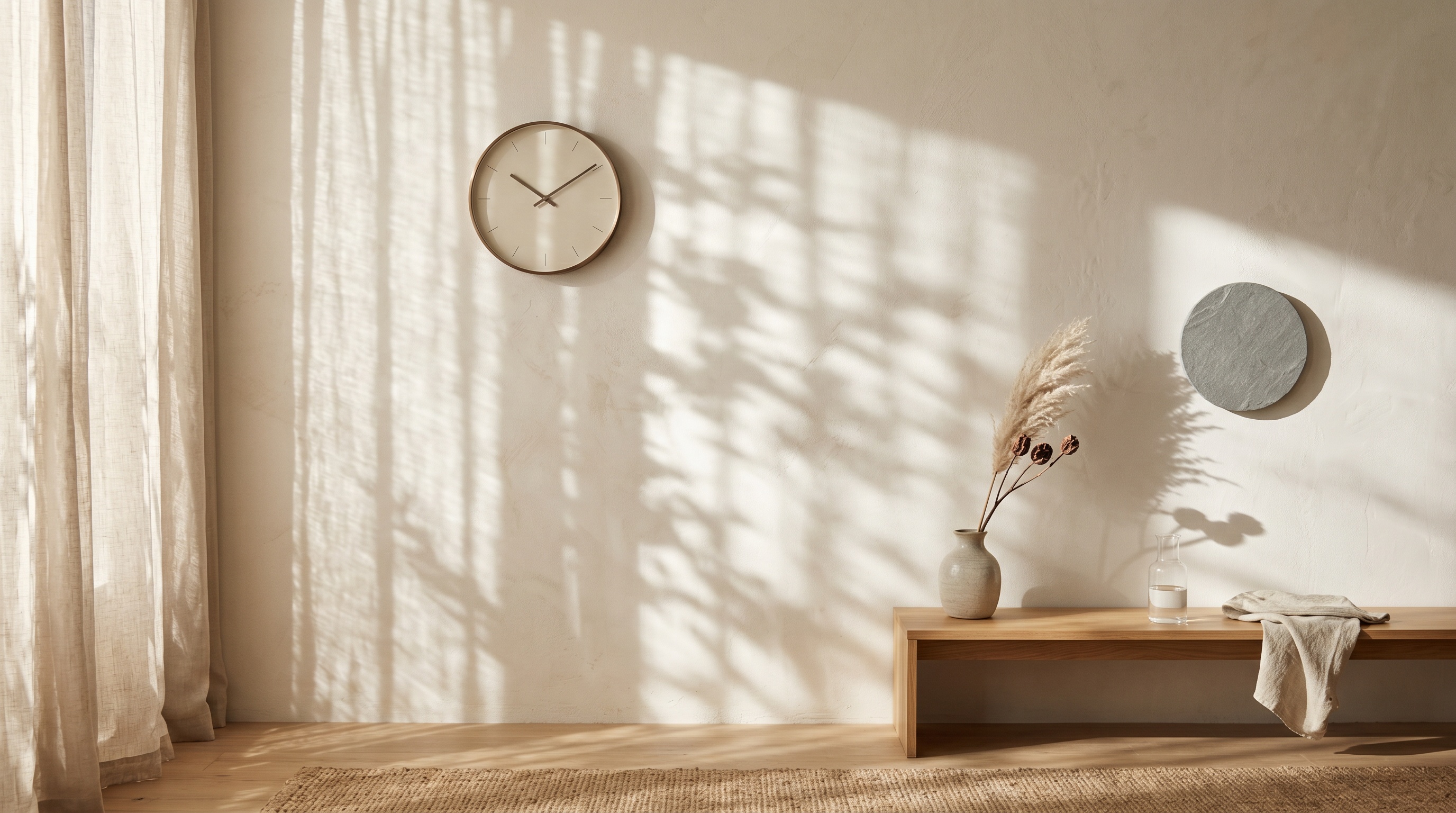
The first principle is simplicity. The body relaxes more easily when the environment is clear. This does not mean sterile. A room can be warm, personal, and alive. But it should not constantly demand attention. Too many visible tasks, objects, screens, cables, piles, and unfinished decisions keep the mind active. Start with one area. A corner. A chair. A bedside table. A small rug near a window. Clear it. This becomes a signal place. A place where the body learns: here, I slow down.
The second principle is light. For recovery, light should be soft, warm, and indirect. Bright overhead lighting can be useful for work, but it is rarely ideal for evening restoration. Lamps, candles, dimmers, and low-level light help mark the transition from doing to being.
The third principle is texture. Natural materials often create a more grounded atmosphere: wood, cotton, wool, linen, clay, stone, plants. The point is not aesthetic purity. The point is sensory honesty. The body responds to materials. It knows the difference between harsh and gentle, cold and warm, artificial and living.
The fourth principle is sound. A recovery space should reduce unnecessary noise. This may mean turning off devices, closing a door, using soft textiles, adding curtains, or creating a practice of intentional silence. If silence feels too intense, gentle sound can help: soft music, nature sounds, mantra, breath guidance, or a quiet frequency-based session.
The fifth principle is meaning. A space becomes restorative when it holds intention. A small object can help: a candle, a picture, a stone, a book, a prayer bead, a plant, a journal. Not decoration for others, but meaning for you.
A recovery space is not an escape from life. It is a place where you digest life. You sit. You breathe. You stop explaining. You let the day come down from the shoulders. You allow the body to complete what the mind kept carrying.
This kind of space can also support practices: meditation, PEMF sessions, journaling, prayer, stretching, breathwork, or simply quiet tea in the evening. The key is repetition. When you return to the same place with the same intention, the body begins to recognize it. Over time, the room starts helping you before the practice even begins.
A well-designed recovery space says one thing clearly: You do not have to perform here. And for many people, that message alone is medicine.
Checking sign-in…
Reflections unavailable
Article notes require the live catalog connection.
This piece is not linked to the member catalog yet, so private notes cannot attach here.
Private notes
Your space beside this article
Keep notes only you can see—quiet sentences for another reading, not comments or conversation.
Private reflection
Only you see this
Not shared with anyone — your notes beside this piece. Edit anytime from here or from My Wellness Space.
Related reading
More articles
-
Environment
Your Home Is Not Neutral
A room can look beautiful and still exhaust you. Light, air, sound, and order send signals the body reads whether or not you do. Coherence, not price, is what makes a home restorative.
-
Environment
Home Harmony: Rooms That Remember Calm
A gentle framework for order, light, and material honesty—so your space whispers back what you are trying to become.
-
Clarity
The Quiet Discipline of Coming Back to Yourself
The world rewards speed; the inner life grows through small, faithful returns. A one-minute “three-point return” can change the quality of a whole day.


Keep going on your terms
This article is one step—not the whole climb
You can join a live hour, read another piece, or book private work when you are ready to go further.